
Card by card
How to use this guide
The deck is divided into two groups. The 22 Major Arcana describe broad passages and recurring life themes; the 56 Minor Arcana, split into four suits of fourteen cards, bring the reading down to everyday situations, choices and relationships.
For each card you will find three or four key words, the upright meaning and the reversed meaning. A reversed card is not automatically negative: it often points to an energy that is blocked, delayed, excessive or turned inwards.
- start from the image and from your first impression, then read the description;
- connect the card to the question and to its position in the spread;
- notice repeated suits and numbers: they show where the reading is concentrated;
- when a meaning feels distant, ask yourself which part of your situation it could describe.
The 22 Major Arcana
The Major Arcana follow the journey of the Fool, from the first step into the unknown to the completeness of the World. When they appear in a spread, they point to themes that go beyond the single episode and ask for attention over time.
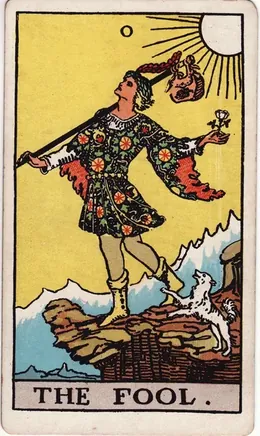
The Fool
beginnings, spontaneity, trust, risk
Upright: The Fool marks a fresh start made of trust and lightness, the step taken before every answer is in hand. In practice it invites you to try a new path in love, work or a personal choice, accepting some risk.
Reversed: It can point to recklessness, a leap made without looking where the foot will land, or a fear that keeps you on the threshold. It suggests pairing enthusiasm with a little realism.
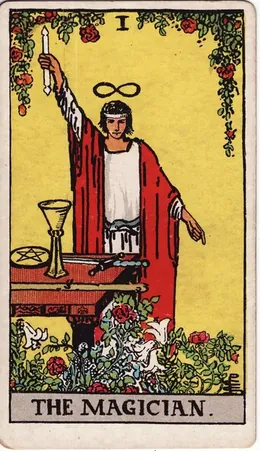
The Magician
willpower, skill, initiative, focus
Upright: The Magician represents the ability to use what you have with intention and clarity. At work and in projects it suggests moving from idea to action, bringing together talent, tools and effective communication.
Reversed: It can point to scattered energy, unused talent or persuasion that edges into manipulation. It invites you to ask whether the goal is truly clear and whether the means you have chosen are honest.
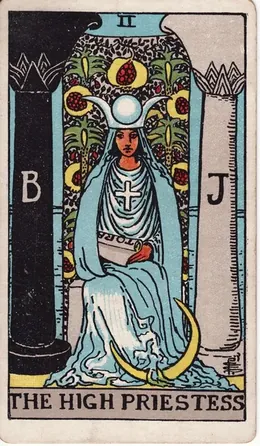
The High Priestess
intuition, silence, mystery, inner listening
Upright: The High Priestess speaks of what is known without being said, a knowledge that ripens in silence. In relationships and choices it invites you to listen to intuition, observe before exposing yourself, and let answers surface in their own time.
Reversed: It can point to an ignored intuition, secrets that weigh heavily, or a detachment that turns into withdrawal. It invites you to give voice to what you sense, without waiting for perfect confirmation.
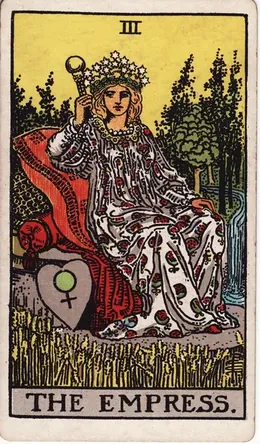
The Empress
fertility, nurture, abundance, sensuality
Upright: The Empress evokes growth, care and the pleasure of living, the force that nourishes what is being born. In practice it can speak of generous affection, a project taking shape and a calmer relationship with the body and senses.
Reversed: It can point to dependence on others, overprotectiveness or creativity struggling to find room. It invites you to care for yourself as well, without smothering anyone or neglecting what matters.
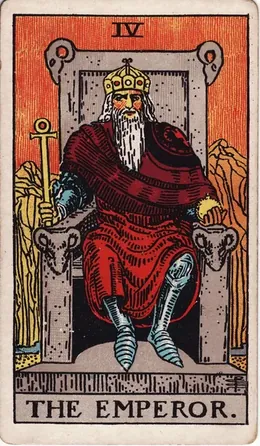
The Emperor
structure, authority, stability, responsibility
Upright: The Emperor stands for order, clear rules and the willingness to take responsibility for a decision. At work and in daily life it suggests building solid foundations, setting boundaries and leading with consistency rather than force.
Reversed: It can point to rigidity, a need for control or authority that feels heavy, whether yours or someone else’s. It invites you to ask where structure protects you and where it simply leaves no room to breathe.
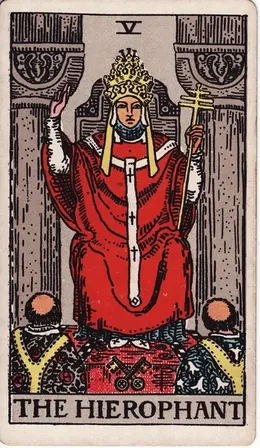
The Hierophant
tradition, teaching, values, belonging
Upright: The Hierophant recalls the value of tradition, teachers and shared rules that offer a common horizon. In practice it can point to a course of study, a formal commitment or a reckoning with values inherited from family or community.
Reversed: It can point to dogmatism, conformity or discomfort with rules that no longer ring true. It invites you to tell apart what is worth keeping from what you follow out of habit alone.
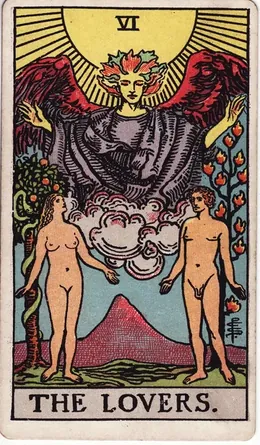
The Lovers
choice, union, alignment, values
Upright: The Lovers speak of a choice that engages both heart and integrity, not only of a romance. In relationships and decisions they invite honest dialogue and action in line with what you truly consider important.
Reversed: It can point to indecision, a gap between what you say and what you want, or a bond kept going out of inertia. It invites you to clarify your values before choosing.
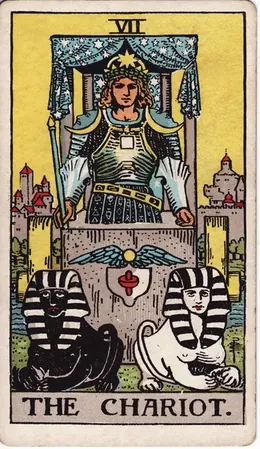
The Chariot
determination, direction, victory, discipline
Upright: The Chariot points to a forward drive backed by discipline and a clear goal, the ability to hold opposing forces together. At work and in personal challenges it suggests taking the reins and keeping your course with steadiness.
Reversed: It can point to scattered effort, bursts of aggression or a direction lacking clarity. It invites you to slow down, sort out conflicting impulses and check where you truly want to arrive.
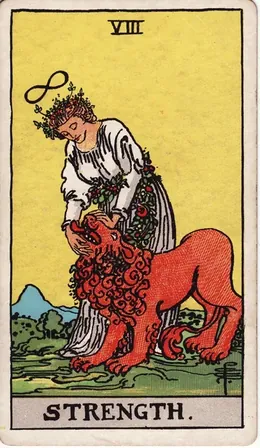
Strength
gentle courage, patience, self-control, compassion
Upright: Strength shows a courage that does not dominate but accompanies, the patience of one who tames impulses with gentleness. In relationships and difficulties it suggests calm firmness, attention to your own emotions and trust in inner resources.
Reversed: It can point to self-doubt, held-back anger or a self-control so rigid that it eventually bursts. It invites you to acknowledge your vulnerability without treating it as a weakness.
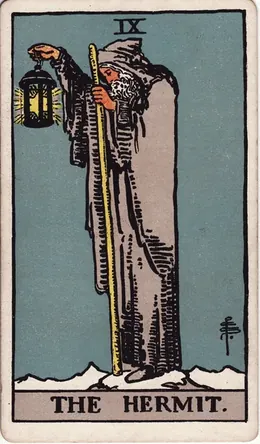
The Hermit
introspection, search, solitude, wisdom
Upright: The Hermit represents a time of retreat in which you pause to understand which way to go. In practice it invites you to lower the noise, allow chosen solitude and consult those who have experience to share.
Reversed: It can point to excessive isolation, hiding in solitude to avoid a conversation, or difficulty being alone with yourself. It invites you to find a balance between silence and contact with others.
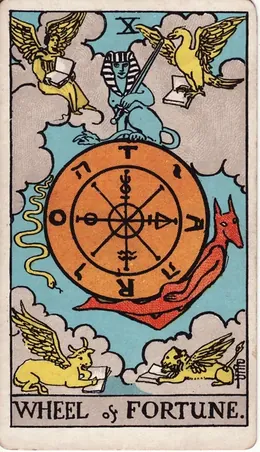
Wheel of Fortune
cycles, turning point, opportunity, change
Upright: The Wheel of Fortune reminds us that everything moves in cycles and that a stalled situation can shift position. In practical life it suggests seizing an opportunity as it appears and accepting what lies beyond your will.
Reversed: It can point to a feeling of repeating the same patterns or of being at the mercy of outside events. It invites you to separate what escapes your control from what you can still influence.
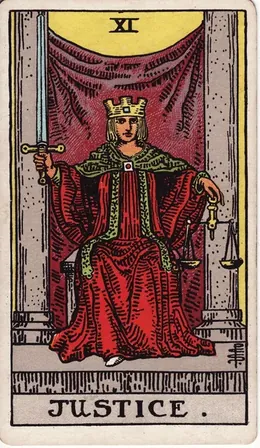
Justice
balance, truth, accountability, consistency
Upright: Justice speaks of balance between what we do and what follows, of choices weighed with clear eyes. In relationships and work it invites honesty, an impartial look at the facts and ownership of your own decisions.
Reversed: It can point to overly harsh judgment, a habit of postponing a difficult conversation or a sense of being treated unfairly. It invites you to review the facts with more detachment, including those about yourself.
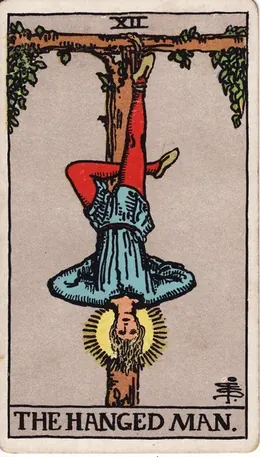
The Hanged Man
suspension, surrender, new perspective, waiting
Upright: The Hanged Man represents a pause that is not defeat but a chance to see things from another angle. When a situation will not budge, it suggests letting go of the need for control and accepting a fruitful wait.
Reversed: It can point to a wait stretched out by fear of deciding, or a sacrifice made with no real purpose. It invites you to ask whether the pause still serves you or has become an excuse.
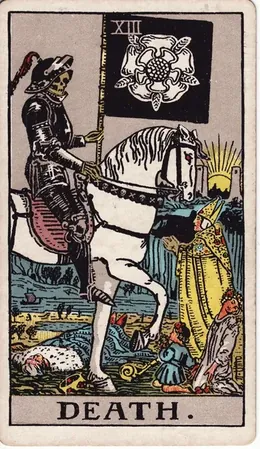
Death
transformation, end of a cycle, rebirth, letting go
Upright: Death does not announce a literal ending but the necessary closing of a phase to make room for something else. In practice it can concern a bond, a role or a habit that has run its course and asks to be released.
Reversed: It can point to resistance to change, attachment to what has already ended, or a transformation unfolding slowly. It invites you to allow yourself the time to say goodbye to what is no longer there.
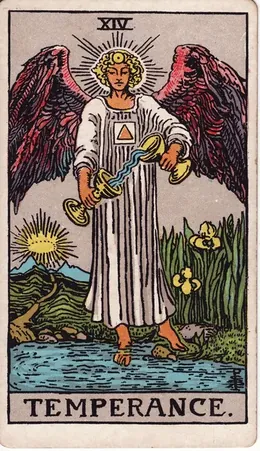
Temperance
balance, moderation, harmony, patience
Upright: Temperance evokes the art of blending different elements with measure and finding the right rhythm. In relationships and everyday choices it suggests moderation, listening and gradual progress that holds body, mind and feeling together.
Reversed: It can point to imbalance, excess in one direction or impatience for immediate results. It invites you to find a sustainable rhythm, correcting with small adjustments rather than drastic gestures.
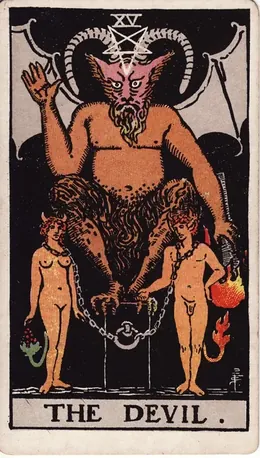
The Devil
attachment, temptation, shadow, dependency
Upright: The Devil highlights the ties we tighten ourselves: habits, desires or dynamics that are hard to step away from. In practice it invites you to look honestly at what you have chosen to put up with and to see how much freedom you already have.
Reversed: It can point to a chain beginning to loosen, awareness of a pattern or, conversely, denial of the problem. It invites you to proceed gradually, without judging yourself for the time it has taken.
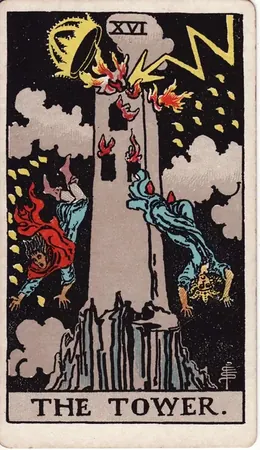
The Tower
collapse, revelation, liberation, upheaval
Upright: The Tower represents the moment a fragile structure gives way and truth emerges suddenly. In practice it can indicate an unexpected change in a project or relationship that, though unsettling, clears room for more authentic foundations.
Reversed: It can point to fear of a change you feel approaching, or an effort to prop up what is already unstable. It invites you to act with care before the tension builds.
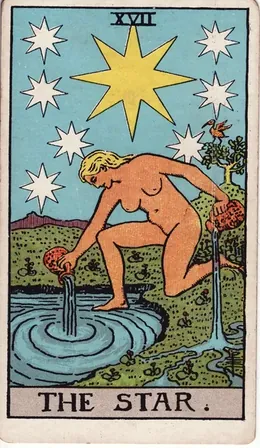
The Star
hope, renewal, serenity, inspiration
Upright: The Star brings a calm light after a difficult time, a sense of trust rebuilt with simplicity. In practical life it suggests nurturing a sincere project, allowing yourself some restoration and staying open to what inspires you.
Reversed: It can point to discouragement, hope that is hard to feel or expectations too far from reality. It invites you to start again from small acts of care and goals within your reach.
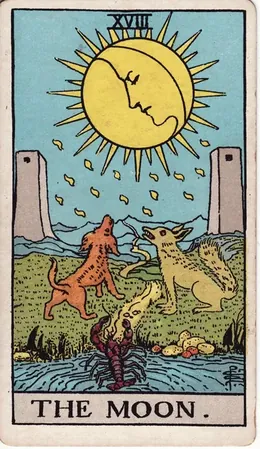
The Moon
illusion, intuition, dreams, uncertainty
Upright: The Moon describes a terrain where nothing is entirely sharp: dreams, fears and intuitions blend with shadows. In choices and relationships it suggests caution, attention to inner signals and putting off final judgments.
Reversed: It can point to confusion beginning to clear, or fears that swell in the dark. It invites you to name what troubles you and to check the facts calmly.
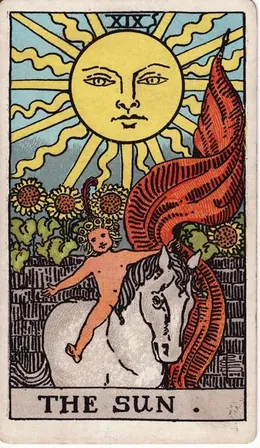
The Sun
joy, clarity, vitality, success
Upright: The Sun brings clarity, warmth and a simple sense of trust, like fog lifting. In relationships and work it suggests spontaneity, recognition of your own merits and the pleasure of sharing what is going well.
Reversed: It can point to dimmed enthusiasm, an optimism that overlooks details or difficulty enjoying what you already have. It invites you to find joy again in small things.
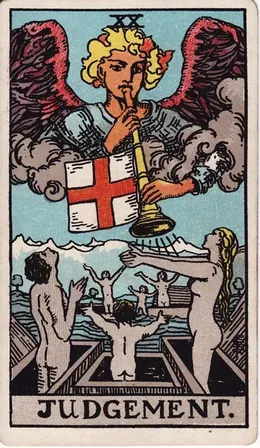
Judgement
awakening, reckoning, calling, forgiveness
Upright: Judgement represents a moment of reckoning in which you hear an inner calling again and recognise your path. In practice it invites you to forgive the past, make a mature decision and respond consistently to what feels important.
Reversed: It can point to excessive self-criticism, doubts that hold back a turning point or a refusal to look at what has been. It invites you to treat yourself more kindly so that you can truly move on.
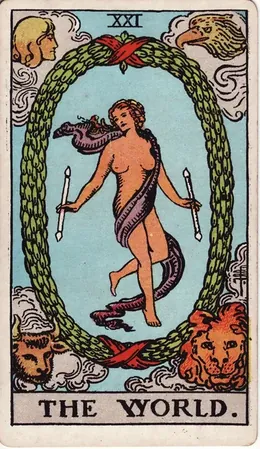
The World
completion, integration, wholeness, milestone
Upright: The World marks the closing of a cycle brought to its end and the sense of wholeness that follows. In practice it can concern a goal reached or a phase of integration, and invites you to acknowledge the road travelled before setting out again.
Reversed: It can point to a goal that lacks its final step, difficulty closing a chapter or fear of what comes next. It invites you to refine whatever remains unfinished.
Wands: fire, action and desire
Wands belong to fire: energy, initiative, creativity and ambition. They speak of projects, enthusiasm and the courage to act, but also of impatience and scattered strength.
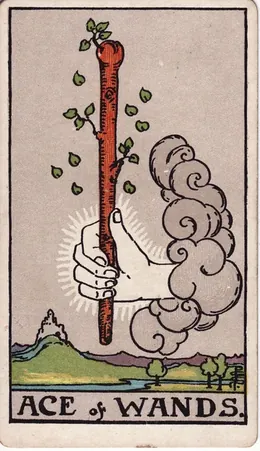
Ace of Wands
spark, inspiration, beginning, energy
Upright: The Ace of Wands is the spark of an idea or desire asking to be welcomed. In practice it suggests taking a first concrete step on a project, a passion or a new phase while the enthusiasm is alive.
Reversed: It can point to an idea that fails to take off, energy that fades early or a start held back by hesitation. It invites you to work out what is really missing to light the spark.
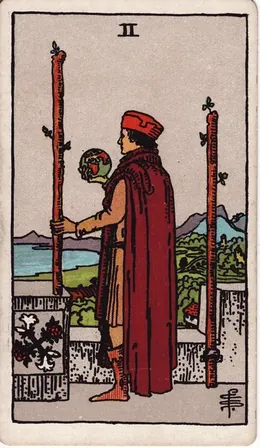
Two of Wands
planning, choice, vision, project
Upright: The Two of Wands shows someone holding the world in hand and wondering where to go. It suggests weighing possibilities, drawing up a plan and deciding whether to stay with the familiar or move past your usual boundaries.
Reversed: It can point to fear of leaving the comfort zone, plans that stay on paper or a vision that is too narrow. It invites you to turn reflection into one achievable first step.
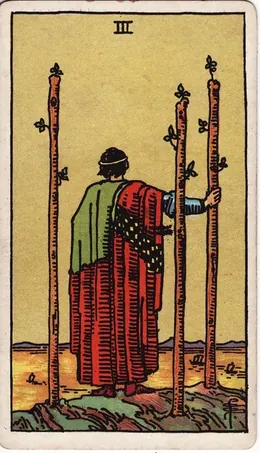
Three of Wands
expansion, waiting, perspective, momentum
Upright: The Three of Wands pictures someone watching the horizon after setting something in motion and waiting for results. At work and in projects it suggests widening your view, seeking distant collaborations and trusting what is already moving.
Reversed: It can point to delays, disappointed expectations or passive waiting that stalls initiative. It invites you to review the plan and ask whether a new contact or a change of course is needed.
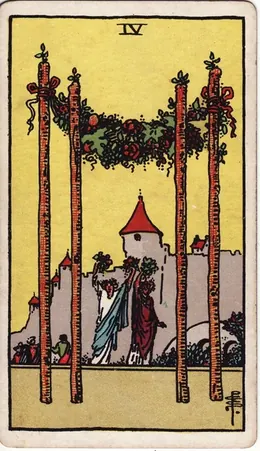
Four of Wands
celebration, stability, community, milestone
Upright: The Four of Wands is the card of celebration, a moment to pause and enjoy what has been built. It speaks of home, shared affection and a milestone that deserves to be acknowledged together.
Reversed: It can point to stability that feels shaky, tension in a family or group, or difficulty feeling at home. It invites you to rebuild an atmosphere of trust through small gestures.
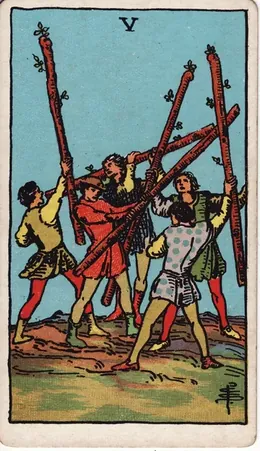
Five of Wands
conflict, competition, debate, tension
Upright: The Five of Wands describes a tangle of opinions and ambitions in which everyone seeks their own space. At work or in a group it can suggest lively competition, useful if it stays a debate and does not become a fruitless clash.
Reversed: It can point to unspoken undercurrents, conflicts that are avoided or a rivalry fading from fatigue. It invites you to look for common ground and to clarify the rules of the discussion.
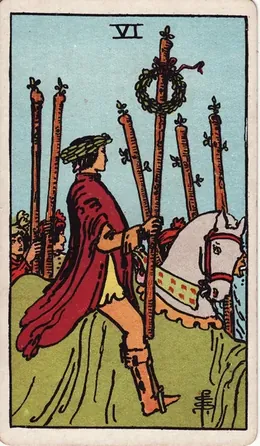
Six of Wands
recognition, victory, confidence, success
Upright: The Six of Wands represents public recognition after steady commitment. At work and in relationships it suggests welcoming a positive result, feeling supported and letting your self-confidence grow.
Reversed: It can point to an excessive need for approval, a success that feels unsatisfying or a fear of not measuring up. It invites you to judge the value of a result by your own standards.
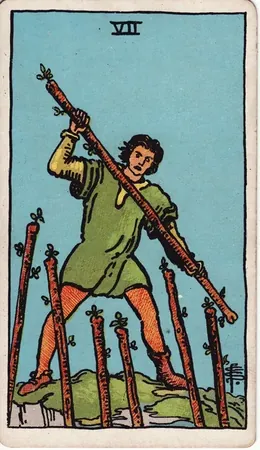
Seven of Wands
defence, determination, standpoint, resilience
Upright: The Seven of Wands shows someone defending their position from higher ground with determination. In choices and discussions it invites you to hold firm to your convictions without being discouraged by those who test you.
Reversed: It can point to weariness from always having to resist, overly defensive attitudes or the temptation to give in. It invites you to ask which battles truly deserve your energy.
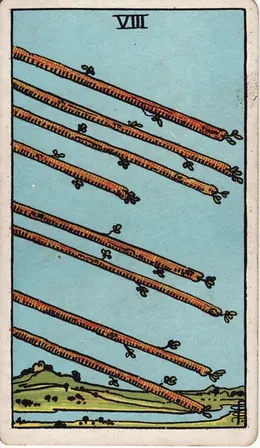
Eight of Wands
speed, movement, news, momentum
Upright: The Eight of Wands evokes events suddenly speeding up, messages arriving and situations coming unstuck. At work and in relationships it suggests acting promptly and making the most of a moment that favours movement.
Reversed: It can point to delays, muddled communication or a pace so frantic that the thread is lost. It invites you to slow down just enough to regain clarity before acting.
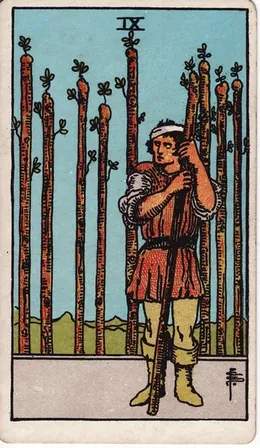
Nine of Wands
resilience, caution, perseverance, fatigue
Upright: The Nine of Wands pictures someone wounded yet still standing, close to the finish. It suggests drawing on experience, staying alert without stiffening, and finding the last reserves of energy to complete what you began.
Reversed: It can point to exhaustion, a wariness that isolates or the weight of old wounds shaping your choices. It invites you to rest and ask for help without giving up.
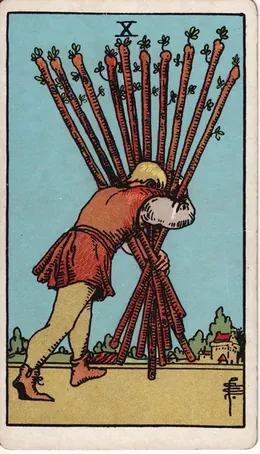
Ten of Wands
burden, responsibility, commitment, overload
Upright: The Ten of Wands shows someone carrying a bundle of staves too large, a step from the goal. In practice it speaks of accumulated commitments, taken on willingly or out of habit, and invites you to ask what could be delegated.
Reversed: It can point to the moment a weight is set down or, conversely, to a hidden fatigue you are reluctant to admit. It invites you to redistribute the load and give priority to what matters.
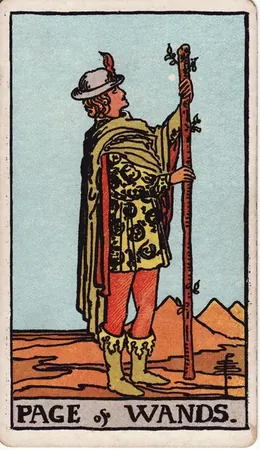
Page of Wands
curiosity, enthusiasm, discovery, message
Upright: The Page of Wands embodies the curiosity of someone approaching something new with enthusiasm. It can point to an exciting proposal, a wish to experiment or a still-raw talent asking for room to grow.
Reversed: It can point to enthusiasm that burns out fast, impulsiveness or ideas launched without follow-through. It invites you to give your intuitions continuity by choosing one or two directions to pursue.
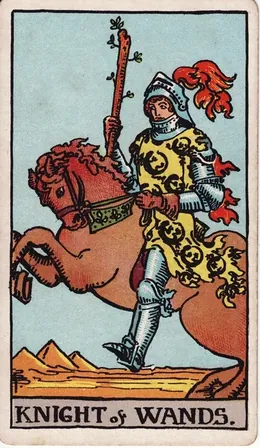
Knight of Wands
boldness, adventure, passion, impulsiveness
Upright: The Knight of Wands is energy at full gallop, passion and a hunger for adventure. In relationships and projects it suggests drive, the courage to put yourself forward and a push to move, as long as direction is not lost.
Reversed: It can point to rashness, flashes of temper or interests that change too quickly. It invites you to channel your energy with more patience before setting off at a gallop.
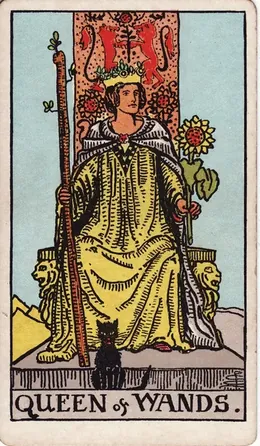
Queen of Wands
charisma, warmth, confidence, independence
Upright: The Queen of Wands combines warmth and confidence, a charisma that comes from being at ease with yourself. At work and in relationships it suggests expressing yourself authentically, inspiring others and nurturing your passions with trust.
Reversed: It can point to jealousy, a need for attention or insecurity disguised as confidence. It invites you to rediscover genuine warmth without seeking constant reassurance from others.
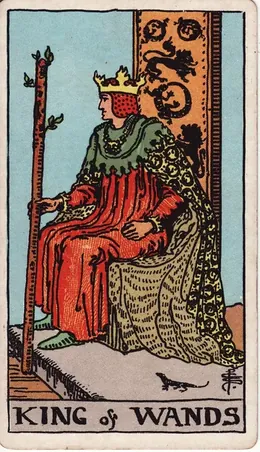
King of Wands
leadership, vision, inspiration, responsibility
Upright: The King of Wands represents leadership built on vision and example rather than command. At work and in major decisions it suggests guiding with courage and generosity, turning ideas into projects that bring others along.
Reversed: It can point to authoritarianism, impatience with those who move more slowly or big promises not backed by facts. It invites you to listen to the group and give your vision a concrete footing.
Cups: water, emotions and relationships
Cups belong to water: feelings, intimacy, imagination and bonds. They describe what we feel and how we relate to others, from new affection to nostalgia and emotional fulfilment.
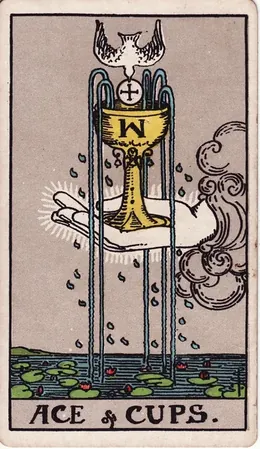
Ace of Cups
new feeling, openness, empathy, inspiration
Upright: A heart opening to something new: affection, inspiration, a sensitivity asking for room. In relationships it invites sincere receptiveness; at work it suggests listening to what genuinely excites you before making a decision.
Reversed: The feeling is there, but it stays closed or held back for fear of exposure. It can point to suppressed emotions, or to inspiration that struggles to take a concrete shape.
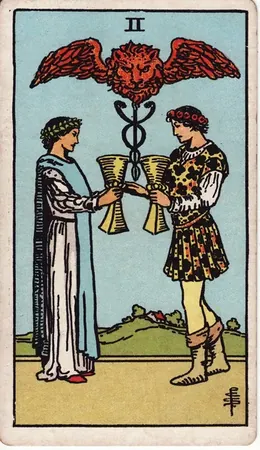
Two of Cups
reciprocity, bond, meeting, balance
Upright: Two people recognize each other and meet halfway. It speaks of reciprocity in love, friendship or partnership, and invites a dialogue in which each side gives and receives with equal respect.
Reversed: The exchange tips out of balance: one person gives more than the other, or unspoken words create distance. It may invite you to reopen the conversation with more clarity and fewer expectations.
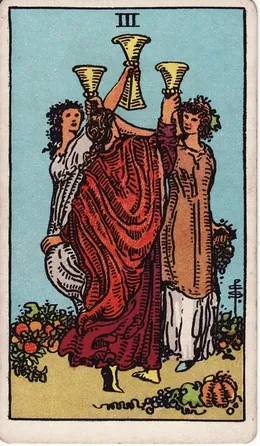
Three of Cups
friendship, celebration, sharing, community
Upright: Joy shared with the people close to you: a gathering, an anniversary, a goal celebrated together. It highlights the value of your circle of friends or colleagues and invites a moment of lightness.
Reversed: Conviviality can tip into excess, gossip or scattered energy, or the group may leave someone on the sidelines. It invites you to ask with whom you truly feel at ease.
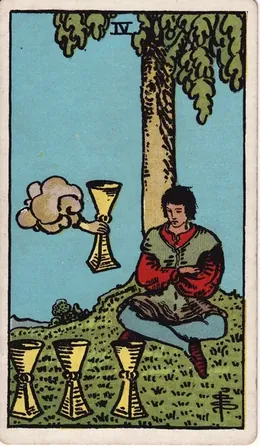
Four of Cups
apathy, introspection, boredom, reflection
Upright: A pause of withdrawal, in which the offers around you seem not to land. It can signal boredom or a need for silence, and invites you to ask what is truly missing before turning down what is on the table.
Reversed: Something stirs: apathy gives way to fresh curiosity, or detachment hardens into closure. You are asked to tell a useful pause apart from a refusal made out of habit.
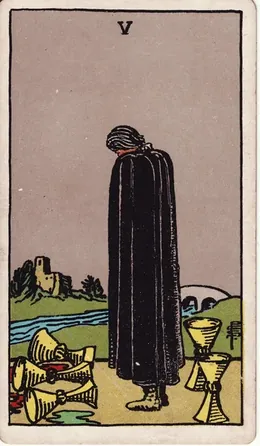
Five of Cups
disappointment, loss, regret, processing
Upright: The gaze is fixed on what has been lost, while something still stands behind. It acknowledges the sting of disappointment and invites you to give it time without forgetting what can still be saved.
Reversed: Emotional mourning begins to ease and attention turns forward, or you linger in a regret that drains energy. It may be a moment for forgiveness, your own included.
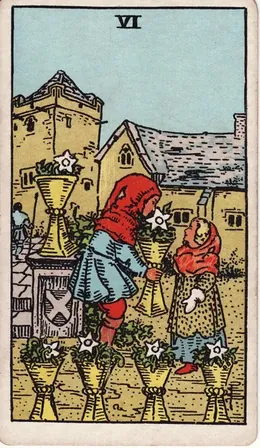
Six of Cups
nostalgia, childhood, memories, kindness
Upright: A tender return to the past: a memory, someone from another time, a simple and sincere gesture. It invites you to recognize what those roots still offer, in relationships and in today’s choices.
Reversed: The past holds on: nostalgia idealizes what no longer exists and slows present steps. It may invite remembering with gratitude, without asking memory to stand in for the life you have now.
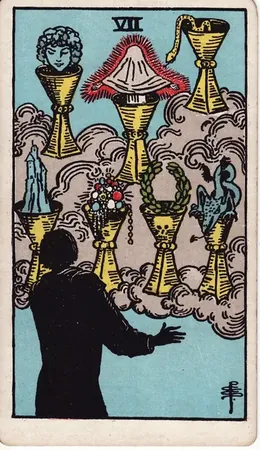
Seven of Cups
fantasies, choices, illusion, imagination
Upright: Many shimmering possibilities appear at once, not all equally solid. It speaks of imagination and competing desires, and invites you to tell an inspiring dream from something that calls for real commitment.
Reversed: The fog lifts and the options grow clearer, or the scattering continues and no choice is made. It may be time to narrow the field down to a few concrete things.
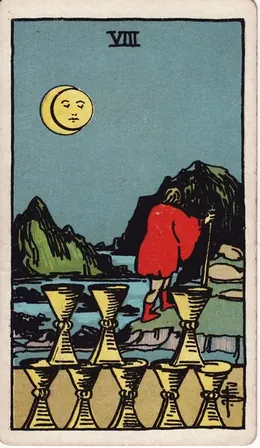
Eight of Cups
departure, detachment, seeking, maturity
Upright: You leave behind something that no longer nourishes, even if it looks complete, in search of deeper meaning. In relationships and work it suggests a considered farewell, driven by an inner calling.
Reversed: The wish to leave collides with indecision, or you run without knowing from what. It invites you to check whether what is missing lies elsewhere or asks for a more honest look within.
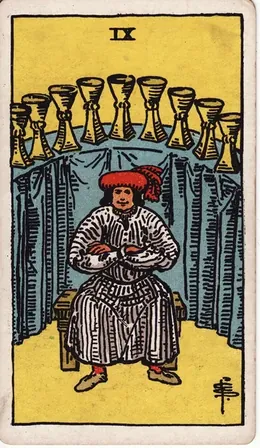
Nine of Cups
satisfaction, fulfillment, gratitude, wishes
Upright: The wish fulfilled in a symbolic sense: a result that brings contentment and room to enjoy it. It invites you to acknowledge with gratitude what has been built, in work and in relationships.
Reversed: Well-being is only a surface, or satisfaction stops at self-congratulation. It can point to fulfillment sought outside yourself, and invites you to ask what would truly feel like enough.
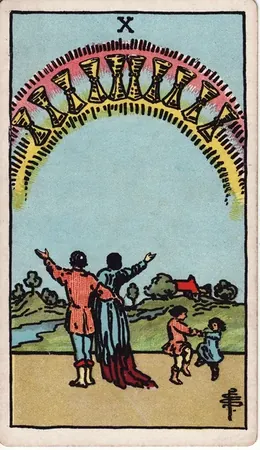
Ten of Cups
harmony, family, serenity, belonging
Upright: A picture of affections in tune: home, family of origin or of choice, shared values. It invites you to nurture the bonds that give meaning and to see how serenity is built day by day.
Reversed: Harmony shows a few cracks: family expectations, an ideal image to defend, unspoken conflicts. It may invite you to admit differences and rebuild the bond on more honest ground.
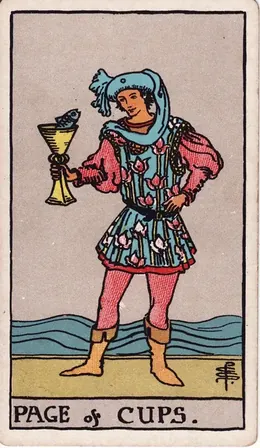
Page of Cups
sensitivity, curiosity, message, creativity
Upright: A kind piece of news, an intuition or a creative invitation arrives in a simple, sincere tone. It suggests welcoming your sensitivity without fear of seeming naive, in relationships and at work alike.
Reversed: Emotion takes over: touchiness, immaturity, or daydreams that never become action. It may invite you to give your feelings a clearer, less impulsive language.
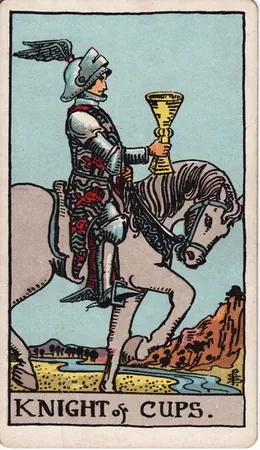
Knight of Cups
romance, proposal, ideals, charm
Upright: It arrives with an offer, an invitation or a heartfelt gesture, moved by ideals and a touch of romance. In relationships it invites openness, while checking that words are followed by concrete choices.
Reversed: Charm hides inconsistency: promises prettier than they are solid, shifting moods, escape into fantasy. It can point to an unanchored emotional life that asks for coherence between feeling and doing.
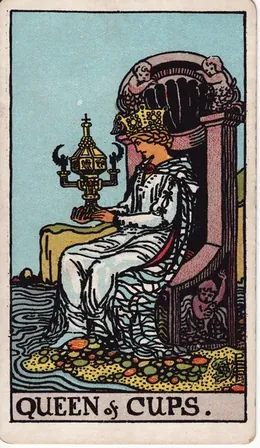
Queen of Cups
empathy, intuition, care, listening
Upright: A mature sensitivity, able to listen and hold emotions without being swept away. In relationships it invites care and presence; at work it suggests trusting an intuition that has been carefully heard.
Reversed: Empathy turns into absorption: you carry other people’s burdens, or shut down to protect yourself. It invites soft but real boundaries, so you can care for others without forgetting yourself.
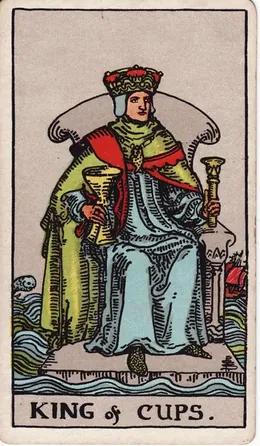
King of Cups
emotional balance, diplomacy, wisdom, maturity
Upright: Emotion and reason find common ground: calm under tension, support without intrusion. It suggests guiding relationships and decisions with diplomacy and staying steady when the surroundings grow turbulent.
Reversed: Self-control can harden into coldness or repression, with feelings surfacing sideways. It invites you to give emotions an honest outlet rather than managing them only from the outside.
Swords: air, thought and conflict
Swords belong to air: thought, words, decisions and conflict. They help to name problems clearly, while also showing anxiety, tension and the cost of being too hard on ourselves.
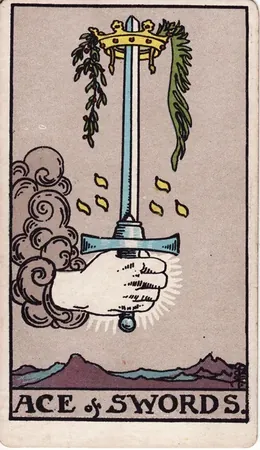
Ace of Swords
clarity, truth, mental insight, breakthrough
Upright: A flash of lucidity cuts through confusion and shows the matter as it is. In decisions and conversations it invites you to name things precisely, with courage and without harshness.
Reversed: Ideas stay muddled, or words wound more than needed. It can point to a truth being avoided, or an opinion voiced too hastily: more focus is needed before speaking.
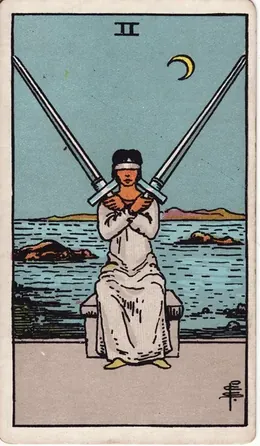
Two of Swords
indecision, stalemate, balance, defense
Upright: A choice put off, eyes covered and two swords held in balance. It describes a situation in which protecting yourself feels easier than deciding, and invites you to look for the information or courage that is missing.
Reversed: The stalemate cracks: the blindfold slips and the picture becomes visible, sometimes uncomfortably. Or indecision becomes chronic, and delaying ends up costing more than an imperfect choice.
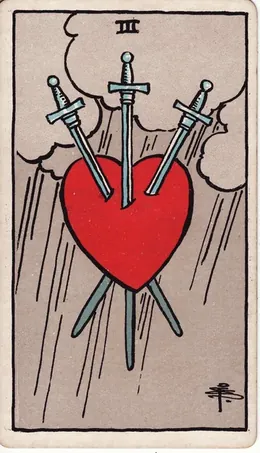
Three of Swords
pain, separation, hard truth, wounded heart
Upright: A sharp pain, arising from a word, a distance or a truth accepted with difficulty. It does not deny the wound: it invites you to acknowledge it and give it room, since that is how healing begins.
Reversed: Pain begins to ease, or stays held in and resurfaces as resentment. It can point to forgiveness maturing slowly, or to the effort of letting an old wound go.
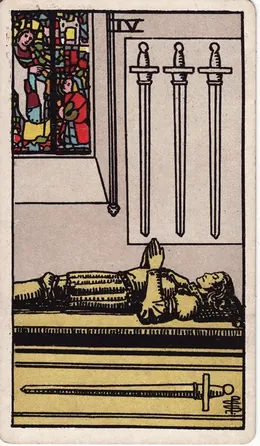
Four of Swords
rest, pause, recovery, stillness
Upright: A needed halt, in which the mind can stop fighting and recharge. It invites you to carve out silence and distance from urgent matters, so you can return to decisions with clearer thinking.
Reversed: The pause is either put off until exhaustion, or stretches until it becomes avoidance. It may invite a gradual return to movement once rest has done its work.
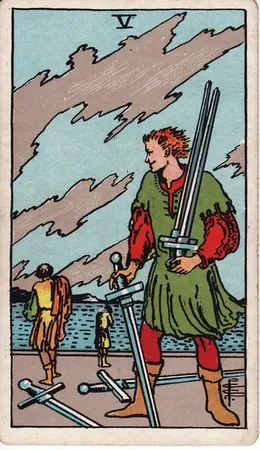
Five of Swords
conflict, pride, defeat, choosing battles
Upright: A victory with a bitter aftertaste, won at someone else’s expense. It invites you to ask whether certain arguments are worth what they cost, in personal relationships as much as at work.
Reversed: After the clash comes a time for truce, or resentment keeps smoldering beneath the surface. It may point to the chance of admitting your own faults and ending a wearing contest.
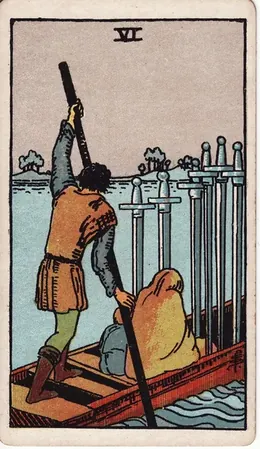
Six of Swords
transition, passage, calm, moving on
Upright: A slow journey toward calmer waters, carrying only what is needed. It suggests a period of transition, with a little sadness and a lot of relief, and invites you to proceed with patience.
Reversed: The passage is obstructed: letting go proves hard, or you set out carrying the same burdens. It invites you to look at what you are really bringing from one phase to the next.
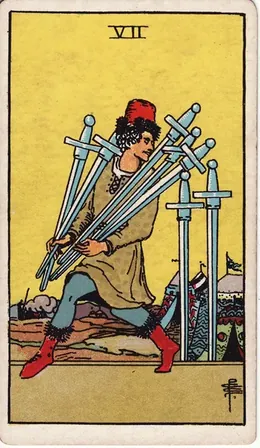
Seven of Swords
strategy, discretion, deception, cunning
Upright: An action carried out quietly or cleverly, which may be strategy or a lack of transparency. It invites you to ask whether the chosen path is truly the most honest, and who is acting with what intent.
Reversed: What was hidden comes to light, or the urge grows to come clean and set things right. It can point to a decision to stop improvising around problems and act more openly.
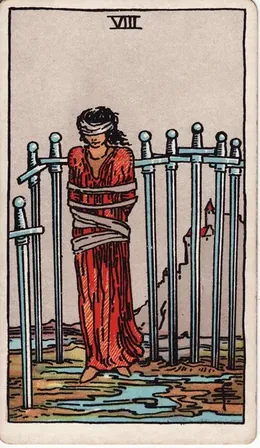
Eight of Swords
restriction, perceived limits, fear, impasse
Upright: You feel boxed in by a situation that, looked at closely, has more room than it seems. It invites you to tell real constraints from those built by thought, and to take one small first step.
Reversed: The blindfold slips and a way out comes into view: the sense of constriction loosens. The habit of seeing yourself without options may linger, so gradual trust in your own resources is needed.
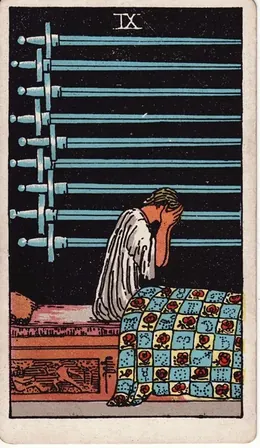
Nine of Swords
anxiety, worry, sleepless nights, rumination
Upright: Worries grow in silence, often larger than the facts warrant. It invites you to give your thoughts a voice, talk with someone you trust and, if the weight is too much, ask for suitable support.
Reversed: Anguish begins to lose its grip, or stays hidden and unshared. It may point to a time to look at your fears more realistically and seek support instead of carrying them alone.
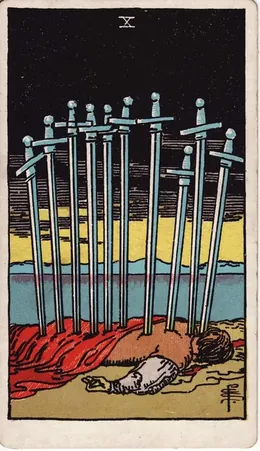
Ten of Swords
end of a cycle, exhaustion, closure, renewal
Upright: A phase ends for good, and with it a way of thinking or a situation that had run its course. The picture is stark, but the dawn on the horizon suggests something else can begin.
Reversed: The worst is behind, yet it is hard to let go and you stay in the role of the wounded. It may invite you to gather what the experience taught and rise again gradually.
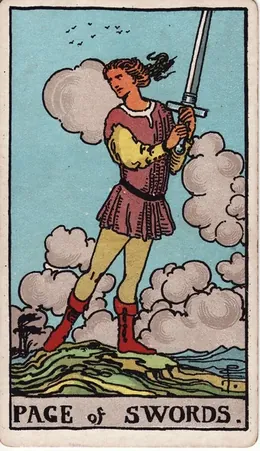
Page of Swords
curiosity, vigilance, ideas, questions
Upright: A lively mind, ready to ask questions and observe closely. At work and in study it invites you to gather information and reason before taking a stand, keeping a curious openness to new ideas.
Reversed: Words run faster than reflection: hasty criticism, gossip or scattered mental energy. It invites you to check your sources and turn that liveliness into steadier study.
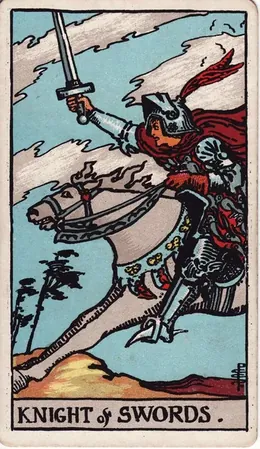
Knight of Swords
drive, determination, speed, directness
Upright: Decisive action, guided by a clear idea and the wish to get there quickly. It can help break a deadlock, but invites you not to leave listening and tact behind along the way.
Reversed: Impetus turns into recklessness: cutting words, rushed choices, a determination deaf to reason. It may invite you to slow down and notice the effect your way of acting has on others.
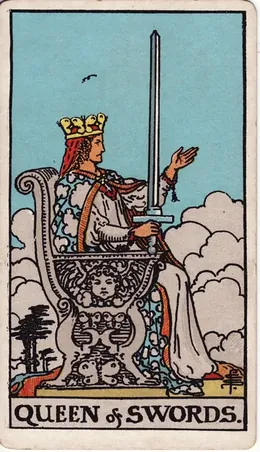
Queen of Swords
clarity, independence, candor, discernment
Upright: A clear gaze, shaped by experience, able to separate facts from illusion. In relationships and at work it invites direct, respectful communication, with clear boundaries and few detours.
Reversed: Clarity stiffens into detachment or harsh criticism, often as a shield against old wounds. It may invite you to let feeling have a voice alongside reason.
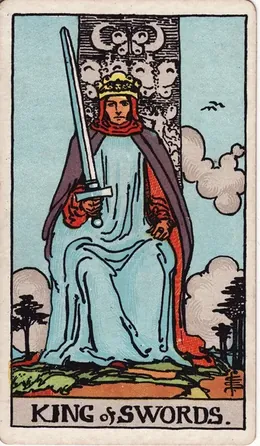
King of Swords
authority, fairness, logic, integrity
Upright: Intellect and responsibility meet: a fair judgment, grounded in principle and verified information. It suggests deciding with method and consistency, and stating your reasons clearly.
Reversed: Authority can harden into cold rigor, dogmatism, or knowledge used to dominate. It invites you to reconsider your own criteria with a measure of humility and empathy.
Pentacles: earth, work and the body
Pentacles belong to earth: work, resources, the body and the material side of life. They speak of patience, skill and stability, and of how we take care of what we build.
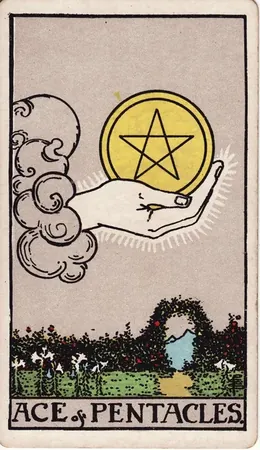
Ace of Pentacles
opportunity, seed, tangibility, beginning
Upright: A tangible opportunity appears, like a seed to plant: a project, a job, a new foundation to build. It invites you to recognize it realistically and give it care and time before expecting fruit.
Reversed: The chance slips by through distraction or mistrust, or begins without enough groundwork. It may point to the need for more careful preparation and more modest expectations about timing.
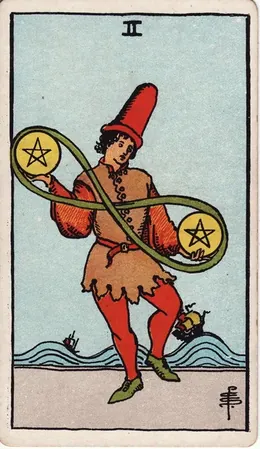
Two of Pentacles
balance, adaptability, priorities, flexibility
Upright: You juggle two commitments or two resources, keeping the rhythm with a light touch. It invites you to organize priorities flexibly, accepting that balance is an ongoing movement rather than a fixed state.
Reversed: The load exceeds what you can manage: scattered focus, disorder, things left half done. It may invite you to choose what to drop and redraw commitments and timing more realistically.
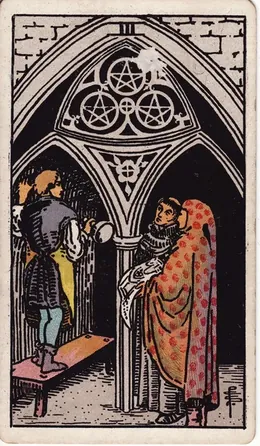
Three of Pentacles
collaboration, skill, teamwork, building
Upright: Each person brings their craft to a shared work, and the result takes shape. In work and joint projects it suggests that dialogue and recognition of skills make what you build more solid.
Reversed: The team does not work as it should: muddled roles, little listening, differing standards. It may invite you to clarify tasks and expectations, or to review the quality of what you are doing.
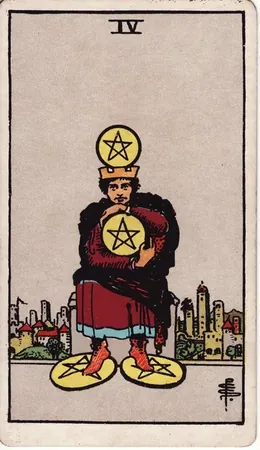
Four of Pentacles
stability, control, security, attachment
Upright: The need to hold on to what you have and feel secure. It can represent healthy prudence in handling resources, but invites you to ask when protection becomes closing yourself off.
Reversed: The grip loosens: you learn to share and let things flow, or lose control of what was held tightly. It invites you to find a balance between security and openness toward others.
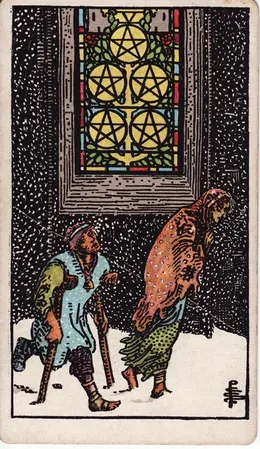
Five of Pentacles
hardship, exclusion, precariousness, support
Upright: A period of scarcity or isolation, in which you feel outside the warmth of others. It reminds you that a lit doorway is near, and invites you to ask for help without shame.
Reversed: The difficult phase begins to recede, or pride keeps you from asking for support. It may point to a gradual recovery, helped by regaining trust in yourself and in the network around you.
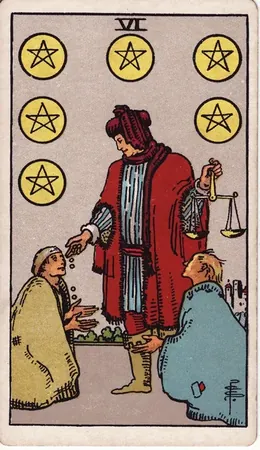
Six of Pentacles
generosity, reciprocity, sharing, fairness
Upright: Giving and receiving in a balanced flow: help offered or accepted, a fair collaboration, a gesture of gratitude. It invites you to reflect on how you share time, skills and resources with others.
Reversed: The exchange loses fairness: giving with strings attached, receiving that weighs on you, or ties of dependence. It may invite you to revisit the terms of an arrangement with more transparency and mutual respect.
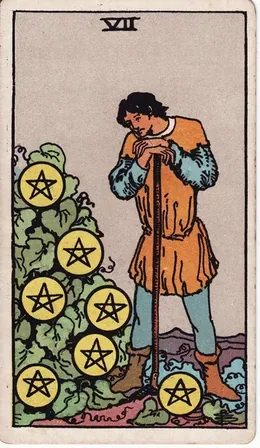
Seven of Pentacles
patience, assessment, investment, waiting
Upright: A pause to look at the growing harvest and assess the work done. It invites patience and an honest review: what is bearing fruit, what still needs care, what is worth adjusting.
Reversed: Impatience pushes you to give up too soon, or you keep investing in what does not grow. It can point to the strain of long timelines, and invites you to review strategy and energy.
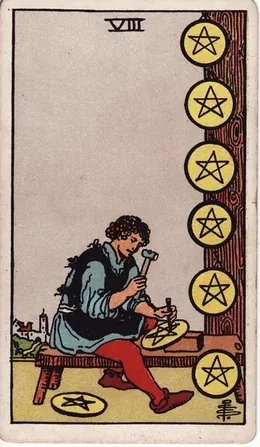
Eight of Pentacles
mastery, diligence, dedication, craft
Upright: The daily commitment of someone honing a skill, one piece at a time. At work and in study it suggests that steadiness and attention to detail build more lasting skills than any shortcut.
Reversed: Dedication turns into perfectionism or hollow routine, or attention drops and the work grows careless. It invites you to rediscover the meaning of what you do before pushing for quantity.
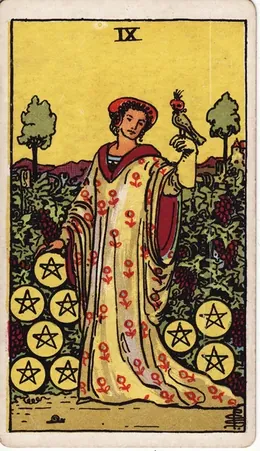
Nine of Pentacles
autonomy, refinement, independence, reward
Upright: The fruit of steady work, enjoyed with grace and on your own terms. It suggests acknowledging with satisfaction your ability to build stability, and allowing yourself the beauty of what you have achieved.
Reversed: Independence can slide into isolation, or well-being depends too much on appearances and others’ opinions. It invites you to ask what gives real security beyond image and control.
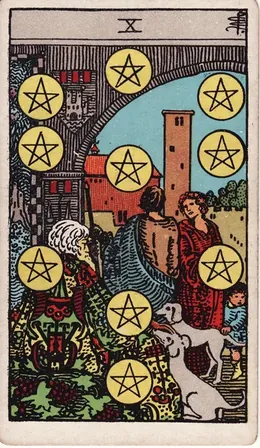
Ten of Pentacles
legacy, roots, stability, continuity
Upright: A solid base built over time, involving family, tradition and lasting bonds. It invites you to reflect on what you receive and what you wish to leave behind, in terms of values as much as belongings.
Reversed: The foundations show strain: family expectations, traditions that feel tight, questions of inheritance or belonging. It may invite you to honestly rethink what to keep and what to let evolve.
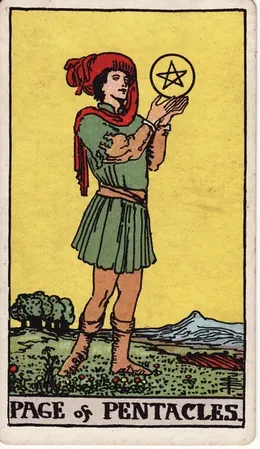
Page of Pentacles
study, practical curiosity, project, learning
Upright: An attentive apprentice, regarding an idea or opportunity with seriousness. It invites you to start small, study methodically and give practical form to a new interest, without rushing.
Reversed: Enthusiasm scatters into postponements, or you get lost in theory and never reach action. It may point to the need for a more defined goal and a first concrete step.
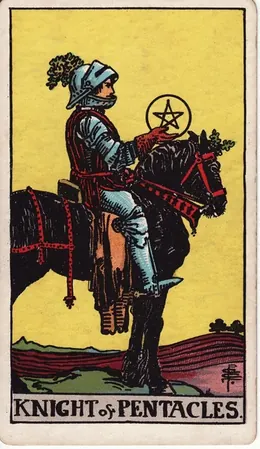
Knight of Pentacles
persistence, reliability, method, patience
Upright: A slow but steady advance, made of responsibility and attention to detail. At work and in relationships it suggests that reliability, more than enthusiasm, builds what lasts over time.
Reversed: Caution turns into inertia, or routine sours into boredom and stubbornness. It invites you to ask whether the method still serves you or whether it is time to bring in something new.
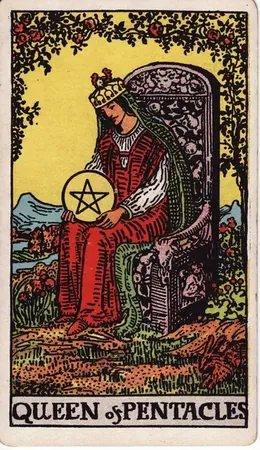
Queen of Pentacles
nurturing, practicality, warmth, resourcefulness
Upright: A warm, practical presence that creates well-being through attention to real needs. It invites you to look after home, work and relationships with generosity and down-to-earth good sense.
Reversed: Care becomes excessive or the self slips to second place: too much on your shoulders, material worries dominating. It may invite you to carve out space and remember that caregivers need to receive too.
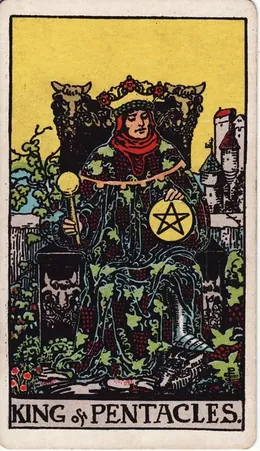
King of Pentacles
solidity, reliability, abundance, responsibility
Upright: A figure who has built steadily and manages what they have with wisdom and generosity. It suggests stability, foresight and a practical approach, able to support others without show.
Reversed: Solidity stiffens into attachment to possessions or status, or work takes the place of everything else. It invites you to remember that security is not measured only by what you own.
Frequently asked questions about tarot card meanings
How many cards are there in a tarot deck?
A standard tarot deck has 78 cards: 22 Major Arcana and 56 Minor Arcana, divided into four suits (Wands, Cups, Swords and Pentacles) of fourteen cards each, from the Ace to the King.
What is the difference between an upright and a reversed card?
An upright card expresses its theme openly. A reversed card usually shows the same theme slowed down, blocked, exaggerated or lived more inwardly. Some readers do not use reversals at all: both approaches are valid if applied consistently.
Do I need to memorise all 78 meanings?
No. It is more useful to understand the structure of the deck, the element of each suit and the progression of the numbers. With practice the key words become familiar, and the image itself starts to suggest the meaning.
Are these meanings valid for every deck?
They follow the Rider-Waite-Smith tradition, the most widespread today. Marseille-style decks have unillustrated pip cards and sometimes different numbering (Strength and Justice can swap places), so some nuances change.
Ready to put the cards to work? Ask a question in the free tarot reading, or learn the method step by step in the guide on how to read tarot.